Monday, February 7, 2022

Kleinscheiss Tag

Of course the Germans have a term for it. 

I was reading this medium article. https://link.medium.com/x4NljxKmkib


There is term for that in German — ‘Kleinscheiss Tag!’ — it means ‘little shit day.’”


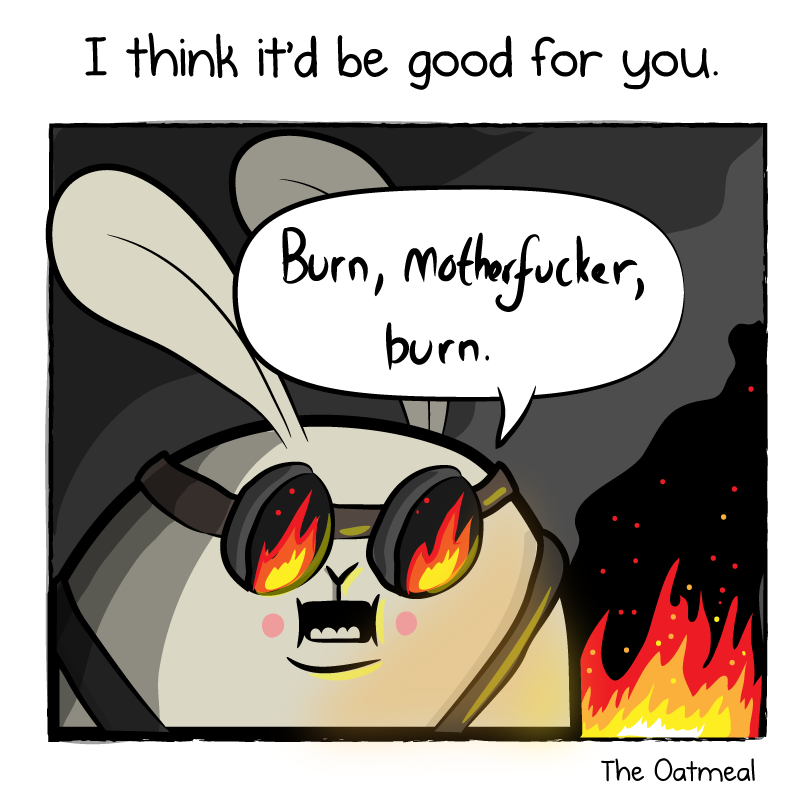
Or I call it a “crud/cruft burn day. It’s when I discard or deal with all the little requests that have piled up in the email and todo lists. 


From unrelated comic here: https://theoatmeal.com/comics/self_love


This week has been all Kleinscheiss days. Yeah I like the term. Not the activity. All of it is small administrivia or short emails.

And it’s “just this one little thing”. I let all my email etc pile up for a week just to see how much of it there was during a summer week.

Not too bad, 200 new emails to deal with. Unsubscribe a bunch, answer, and of course start dealing with the 100+ items that were sitting in the Today/This Week/This Month folders already. 


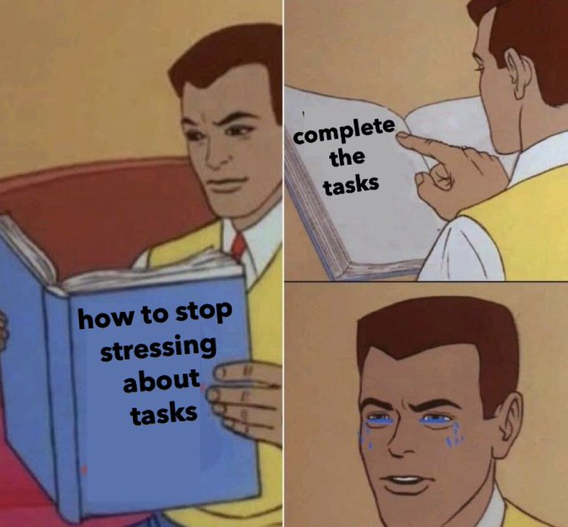
It’s happening. Doing some of the more substantial (medium Scheiss?) like replying to referee reports and what have you. But designating a day for Kleinscheiss is for the stuff that has taken on emotional baggage. You know the memes. The stuff you’d keep putting off even though it really only takes 15min. 

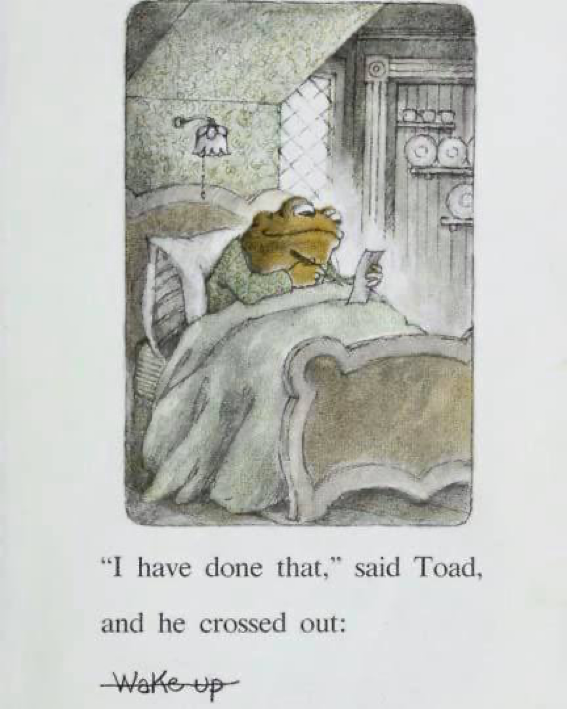
Blarg. Burn them with fire. Or you know. Cross out that item on the list. 


Friday, January 21, 2022

Productivity methods and why they failed (for me)

Trello. - someone made me use it. Confusing and visually noisy. Abandoned almost immediately. And it cost money to expand to enough board for me to use. 

Why it failed: overload from large team. 


Kanban board - found a lovely app that allowed me to color code my tasks and neatly see my progress. 

Why it failed: only worked on my iPad. So only available on one point. So abandoned because I’m cheap and won’t shell out for cross-platform. 


Bullet Journal - hasn’t failed per se. Adopted this after reading a lot about it and listening to productivity podcast. 

Why it would fail: tricky to track progress. Feels like treading water on small tasks. Also: only works where my journal is. 

Why it hasn’t yet: analog. Something pleasant about that. Satisfaction in physically crossing off tasks. Allows me to acknowledge tasks that I do but are not associated with an email. 


Inbox 0 - sorta working. Adopted 5 years ago so should be considered a success. Big thanks to Matt Kenworthy for getting me starting. 

Why it’s failing: does not differentiate between a 2-day task (rewrite this article) and a 30min one. So weight is given to shallow, short-duration tasks. Overwhelm from spam(ish) accounts as well. And I’ve abandoned checking the “waiting” and “someday” folders because...well overwhelm. But the biggest reason: it’s now (forcibly) split between two accounts. 


Time blocking - like the idea. Block time to deal with This Thing. Be realistic about what you really can do each day. 

Why it would fail? Because 2020/2021 that’s why. Labore interruptus. 


To-do list on a pad - literally the worst of all worlds. I would lose the pad and walk around feeling I missed something. I keep finding old ones from years ago. 


Suggestions? Other than Hermione's time turner?

Monday, January 17, 2022

2021 Wins

One of the healthier things to do at the end of the year is to tally the wins. 2021 wasn’t exactly the easiest year with the pandemic raging on and my tenure file due. 


Win #1 the tenure file


This was months long process and it is in. Talkmabout a win list. 5 years of grants, papers and more. I won’t lie. This is an anxiety machine. What needs to go in, what is considered sufficient, what actually gets read etc. is vague enough to add to a general background of anxiety for most of the year. It was a relief/anticlimactic event to have it in. I’m sure there is some more to do. I haven’t heard a peep for months. 


Win #2 the book


I finished my book. The key thing here is finished. I didn’t aim for amazing, brilliant, complete, comprehensive or even fully spelled right. I aimed for complete. If that sounds like I don’t like the end result it’s not that. I can’t really judge. But I did what I set out to do: write a 200+ page book on a topic I like. 


Win #3. Bike to school most days


Ms C has a bike and she and I have been biking to her school most days. We are the only ones. Sometimes scary but it’s been lovely. And doubling down on our Dutch-ness. 


Win #4 m plays football (soccer for US audience) 


This took some doing. Mr M got into a soccer team and we managed to stick with it. And he likes it! Both of these are “trying to be involved parent” goals. Weirdly harder and easier with the pandemic. No travel so I can be there consistently but part of a churn of weeks that seem to grind relentlessly. 


Win #5 classes did ok


I mean not amazing but “pandemic good”. I still got everyone, well most everyone, there and over the finish line. Calling that a solid win in pandemic semesters 3 and 4. Students liked the classes too. 


Win #6. Students did ok


I’m working with students on research. Which is going fine amazingly. They are writing their papers and applying for grad schools. I’m in awe they are functioning at all, even thriving as a group. 


Win #7 kids in the swim team


With the pool opening back up, R got them swimming lessons and they got into the (not hypercompetitive) swim team. Get them to move again. Yay. 


Win #8 40th first author paper 


I resubmitted my 40th first author paper days before my 45th birthday. These numbers are converging. That’s a good thing right? I’m happy I got some of my ideas on paper and into journals. 


Win #9 school clicked for Ms C


Transition to middle school amidst a pandemic was weird and stressful but we all stayed with it and c is now enjoying classes and clubs. 


Win #10. The house got better 


New windows installed, kids got their own bedrooms, redid the columns on the front porch, restored the octagonal window out front, basement fully waterproof and outfitted with small gym. Yeah not bad. 


Win #11. The garden grew some food


This is 99% Robin but our chaos gardening approach did seem to yield a lot of tomatoes. More gardening to come. Death to lawns. 

Wednesday, December 1, 2021

Spoke and hub

In one of the Cal Newport books (I’m re-reading his last three to cull all the insight and distill, more on that probably later), he mentions the setup at Bell Labs and a famous MIT building. They all have a “spoke and hub” setup so people can collaborate and interact serendipitously and then also withdraw in places of privacy and focus. 

This is a key metric I feel for a good scientific environment. And maybe if you are looking at a place of future employment: when being whisked around the campus or department, can you identify where the hub is? Do people seem to appreciate and respect their spokes? Or is it a place where you get your real work done at the coffee shop? 


This sort of hit home with me how we work and how the spaces I’ve occupied as a scientist varied in their approach. Space Telescope, the Kapteyn Institute and Leiden Observatory all had a coffee spot with both free (bad) coffee and space to mingle, chat, and collaborate. ESA was interesting since it was a small department in a huge organization but there was a similar break room. UCT had a cozy break room as well. 


The flip side is how well the offices are appointed and how much people’s space is respected. Here the story is varied. UCT and Leiden were not great as various people felt it was ok to start a sentence in the hallway and expect an answer from me by the time they actually got to my desk and I was still taking my headphones off. ESA was amazing as quiet working on stuff was expected and encouraged. STSCI was somewhere in the middle with open doors everywhere but generally good boundaries, respected by everyone. 


So for those of you on the job market interviewing. This is something to look for. Can you pick out the hub? How do people treat the spokes? Indeed this says a lot about how much good science you’ll get done there. 

Tuesday, October 12, 2021

Technological Determinism and the near demise of IRAF

I’m reading the book “a world without email” by Cal Newport (it’s probably an aspirational title) and he introduces the term “technological determinism” ie when a piece of new technology steers human behavior rather than the other way round. Often in unpredictable ways. Unintended consequences of new technology adaptation. 


Of course there is a corollary in astronomy: the discontinuation of python 2. 


Python 2 is what kept the IRAF tools pyraf alive for many of us. The pyraf wrapper allowed us to simply call a bunch of trusted tools. No need to learn how to manipulate images as numpy arrays, imcalc will do this for you. But then the python project decided to discontinue support for python 2 and everyone had to move to python 3. Grudgingly I did so too. 


This happened while the astropy package had not yet quite reached the maturity of toolset as IRAF. In some ways it still feels like it is catching up (I'd like to rotate this image around this RA and Dec, how do I reduce this spectrum etc). 


OTOH python 3 and astropy were much more optimized for database manipulation. So student projects and the science as a whole much more became focused on that. Part of a drive away from individual sources and more the study of populations from large surveys, accessible from servers. Etc etc. 


Not a bad thing. And mostly something that was happening anyway. But I am left wondering what else it drove. 

Tuesday, June 8, 2021

The zero sum game

Just finished the book “the sum of us” by Heather McGhee. It is a fascinating book about the effects of racism and the adverse effects on white people through the razing of community resources (she starts with the example of public pools and how the response to desegregation was to drain the pool rather than share it). Basically racism is why we can’t have nice things. 


The main premise in her analysis of the thinking of white society in the US is the cornerstone of “zero sum”. If “they” (you’d be amazed how people can put additional baggage in this single word) get more then “we” (same) must be getting less. 

This suddenly snapped a whole bunch of things into context for me. 


This got me to thinking how the “zero sum” attitude pervades academia and astronomy. In some cases there looks to be indeed a zero sum (telescope time, tenure track jobs, and grants). But is there? The zero sum attitude is something that rears its head more in times of (artificial) scarcity: only a few high-z galaxies, just a few exoplanets. Yet it’s pretty clear that the sum of all of us produces more and better science. Inclusive collaborations that produce public data for all to enjoy and use. 


But if you are raised in the zero sum thinking (white, male) then such cooperative efforts are at best a learned experience and at worst threatening. 

Personal and Professional knowledge Management System(s)

I was listening to the “focused” podcast and then an episode of “Mac power users” about PKM (personal knowledge management) systems. Basically what app to use. 


A while back I got into Evernote. It was elegantly designed and allowed met to access my notes on stuff everywhere (iPad, phone, computer). Ideal. I have taken copious notes on a conference for example. I’d like to take notes on talks and tag them (this is aspirational, I still take notes on paper). 


And I like to take notes (plenty of sketches) while I talk to my students. The iPad and Apple pen are really nice to use there. But Evernote isn’t really great with the sketches. And I’ve noticed I stopped using it almost completely. It loads super slow on phone and iPad so I move on. 


So I noticed I partially stopped using Evernote but I do keep notes and save links. But they are scattered everywhere. Two email systems (work and personal) hold notes I’ve taken, there is the iPhone notes app that I’m typing in right now, Twitter and Facebook bookmarks, random text files on my desktop, paper notes, google docs, and I suspect there are more. 


So I need a single system that

1 works on iPad, phone and computers 

2 allows me to sketch

3 synchs easily between everything

4 doesn’t take forever to load

5 OCRs my sketches for ease of finding stuff

6 allows me to share a note easily

7 allows me to back and forward link notes to see connections 

8 can link to other stuff (like references in bibliography) 

9 I can just drag a pdf and other files in and done. 


So do I reinvigorate my Evernote? Or move everything into Craft? Or will craft slow to an unmanageable crawl as I load all the stuff into it? Time to explore. 


This weekend was the final straw. I tried to put some loose ideas I had while running into Evernote. The phone app just sucks. It takes a literal minute to load (yep. a whole 60 seconds, waaaay too long for this). And copies things weirdly, does not capture tweets (critical since so many people tweet links to interesting papers or data etc).


I am migrating notes from *everywhere* to Craft. It does not OCR yet but let's see.